
Ripley County Criminal Court Records
A criminal court record begins when the prosecutor or court filing process creates a criminal case. In Ripley County, the court case can be assigned to the Circuit Court or Superior Court, and the Clerk of the Circuit and Superior Courts maintains the official case record. The case file is separate from a sheriff booking record. A daily arrest report may show that an arrest occurred, while the criminal court record shows what charges were filed, how the defendant responded, what hearings took place, and how the case ended.
The Ripley County Prosecutor files and manages criminal charges for the State of Indiana. The prosecutor's office is in the county courthouse and is headed by Richard J. Hertel according to the official county page. Criminal case users should distinguish the prosecutor's charging role from the clerk's record role and the sheriff's jail or arrest-report role. For the charge-focused arrest-to-case transition, use the separate Ripley County arrest records and court charges resource.
The Ripley County Prosecutor page is the official local source for the office that files and manages criminal charges.
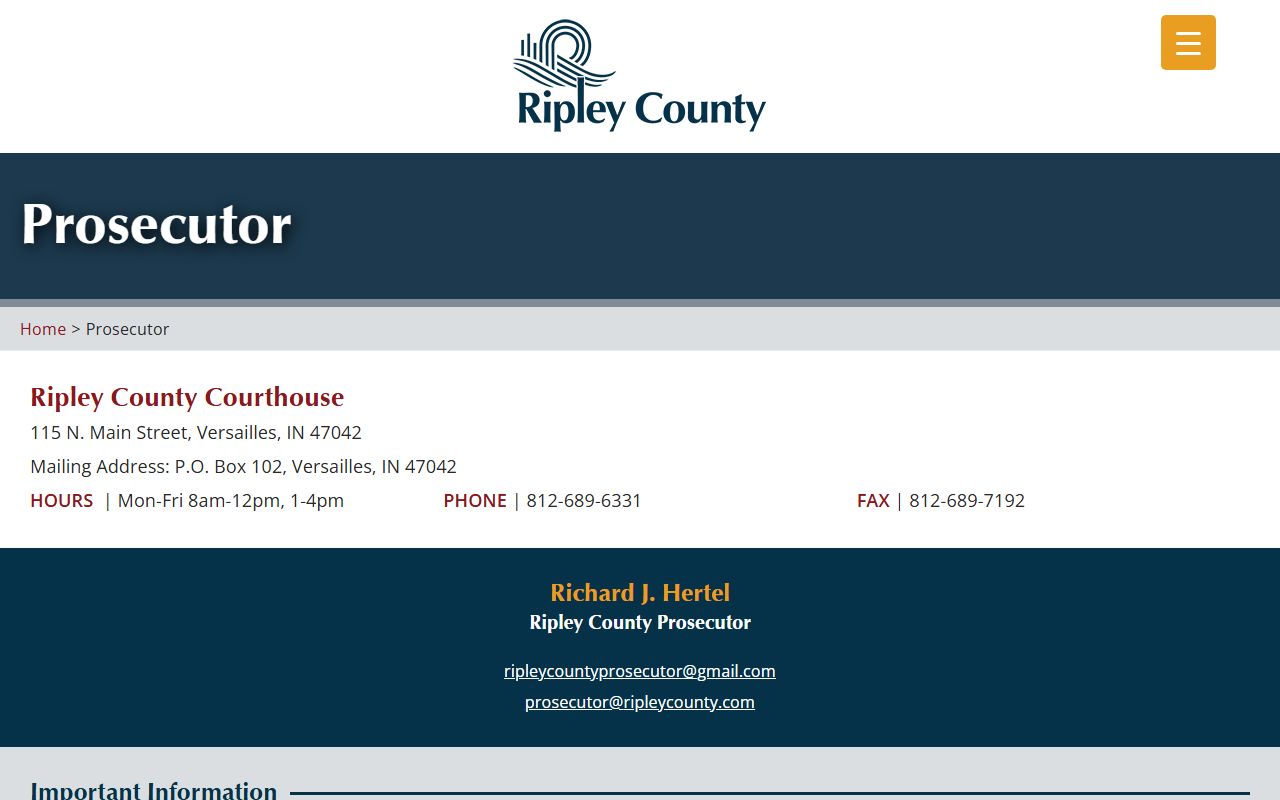
That office is part of the criminal case path, but the official court file and certified copies still route through the court and clerk structure.
Search Ripley County Criminal Records
Public Ripley County criminal court records are searched through Indiana MyCase. A defendant-name search is common when the case number is unknown. A case-number search is better when a bond paper, citation, notice, attorney filing, or court order lists the number. The county filter should be set to Ripley when available. Case type and filing-date filters can help distinguish a felony or misdemeanor criminal case from an infraction, ordinance, civil, family, or probate matter.
- Open MyCase and select a name, case-number, citation-number, or attorney search mode.
- Enter the defendant name or case number, then narrow by Ripley County when the field appears.
- Open the criminal case result and read the header, court assignment, party section, charges, and chronological case summary.
- Review plea, hearing, motion, disposition, sentence, bond, fines, costs, and payment entries when public.
- Contact the clerk for certified copies, missing public documents, older records, and current financial balances.
MyCase is not a complete criminal-history check. It is a court case search. Sentenced prison custody routes through IDOC, county jail custody routes through the sheriff or INjail portal, and federal criminal cases route through PACER and the U.S. District Court for the Southern District of Indiana.
Ripley County Criminal Case Flow
A criminal case moves through stages, and each stage can leave a docket entry or document in the criminal court record. The exact path depends on the charge, plea, motions, court orders, and whether the case resolves by dismissal, plea, trial, diversion-type result, or conviction. A charge is an accusation. A conviction is a final guilty finding or plea accepted by the court. Those two terms should not be treated as the same thing.
Case flow: Charges Filed › Initial Hearing / Arraignment › Pretrial and Motions › Plea or Trial › Disposition › Sentencing
| Stage | What Happens |
|---|---|
| Charges filed | The prosecutor files an information or other charging document, or a citation initiates the case where allowed. |
| Initial hearing / arraignment | The defendant is advised of rights and charges, and bond or release conditions may be addressed. |
| Pretrial and motions | Parties file requests, exchange information, address suppression or discovery issues, and prepare for plea or trial. |
| Plea or trial | The case resolves by plea, trial verdict, dismissal, or another court-approved outcome. |
| Disposition | The record shows the outcome of each count, such as guilty, dismissed, or not guilty. |
| Sentencing | The court records jail, prison, probation, fine, cost, restitution, or other sentence terms when public. |
What Ripley Criminal Records Show
A Ripley County criminal court record is built from case metadata, party data, charge data, docket events, public documents, and financial entries. The public view can include charge descriptions, statute citations, offense levels, counts, plea, disposition, sentence, fines, costs, and bond or appearance information. It can also show motions, notices, orders, hearings, continuances, judgments, payment entries, appeal notices, and probation-related events. Public document links may include final orders and judgments in criminal cases, but not every public document is linked online.
| Field | What It Shows |
|---|---|
| Case number | The court identifier used for exact MyCase lookup and clerk copy requests. |
| Defendant | The person charged in the criminal case, with public identifiers limited by access rules. |
| Court | The Ripley Circuit Court or Ripley Superior Court assignment. |
| Charges and counts | The alleged offenses, statute citations, offense class or felony level, and count numbers when public. |
| Bond and appearances | Bond, release, custody, initial hearing, and appearance entries when included in the public case summary. |
| Plea | The defendant's formal response, such as guilty or not guilty. |
| Motions and orders | Requests filed by parties and written directives entered by the judge. |
| Disposition | The outcome of each charge, including dismissed, guilty, not guilty, or other final result. |
| Sentence | Jail, prison, probation, fines, costs, restitution, and other terms when public. |
Charges vs Convictions
Criminal court records can include charges that never became convictions. A charge means the State alleges an offense and the court case has a count to track. It may later be amended, reduced, dismissed, or resolved by plea or trial. A conviction means the court accepted a guilty plea or entered a guilty finding. The distinction matters for employment, housing, licensing, immigration, firearms questions, and expungement review, but those uses may require legal advice or a compliant background-check process.
| Comparison Point | Charge | Conviction |
|---|---|---|
| Meaning | An accusation filed in court. | A guilty plea or guilty finding accepted by the court. |
| Where it appears | Charge section, docket entries, and charging documents. | Disposition, judgment, sentence, and related docket entries. |
| Can change | Can be amended, reduced, dismissed, or dropped. | Can be appealed, modified, or later restricted if law allows. |
| Record use | Shows what was alleged. | Shows the final guilty outcome for a count. |
Read Criminal Dispositions
Disposition is the key outcome field in a criminal court record. It should be read count by count. One count may be dismissed while another ends in a guilty plea. A sentence entry should also be read with the disposition because the sentence only follows a conviction or other court-approved result that carries conditions. Indiana records may show fines, costs, restitution, probation, jail, prison, community conditions, and payment entries, depending on the case.
Bond entries are not the final outcome. Bond is a financial or conditional release mechanism. Initial hearing and arraignment entries are also not convictions. A motion is a request asking the judge to act, and an order is the judge's directive. If the criminal docket refers to a signed order or sentencing document that is not linked, the clerk can explain copy procedures for public documents.
Note: Read each count separately because one Ripley County criminal case can contain several different outcomes.
Sealed vs Expunged Records
Sealing and expungement both limit public access, but they are not the same. Indiana expungement is governed by Indiana Code 35-38-9, which covers arrests, charges, convictions, and related records. A pending or denied expungement case may be visible. If an expungement is granted, public access may be restricted or removed depending on the type of record and the order entered. The build should not promise eligibility because expungement depends on case facts and statute requirements.
| Comparison Point | Sealed | Expunged |
|---|---|---|
| Basic effect | Hidden from normal public access by court order or rule. | Restricted under Indiana's expungement statute after a qualifying petition and order. |
| Public search | Usually not visible in ordinary public lookup. | May be removed or restricted after the order, depending on record type. |
| How it happens | By court order, rule, or protected category. | By filing under Indiana Code 35-38-9 and obtaining court relief. |
| Records affected | Can apply to a case, document, field, or protected information. | Can apply to qualifying arrest, charge, conviction, or related records. |
The Indiana expungement statute page is the official state source for restrictions on qualifying criminal records.
Use the statute with the actual case number, court, charge history, and disposition before assuming a Ripley County record can be restricted.
Ripley County Criminal Access Rules
Public access to criminal court records is controlled by the same Indiana court-record framework that applies to other case types. The Access to Public Records Act gives a broad public-record right, while the Indiana Rules on Access to Court Records decide what court material is public, excluded, sealed, or available only through special access. MyCase help also warns that official records come from the court maintaining the file and that online information may have errors or omissions. For certified criminal records, use the clerk rather than a screen print.
Key authorities: Indiana Code 5-14-3 covers public agency records, and Indiana court access rules control court-record exclusions.
Police Records and Criminal Cases
Police records and criminal court records often relate to the same event, but they are kept by different offices. A local police department may have incident material. The sheriff may have a daily arrest report, current inmate list, accident-report process, or public-records request form for law-enforcement recordings. The prosecutor decides what charges to file. The court case then tracks the filed charges, hearings, motions, disposition, and sentence. A person who only checks one source may miss another part of the record trail.
The Town of Versailles Police Department page is one local law-enforcement source in the courthouse town.
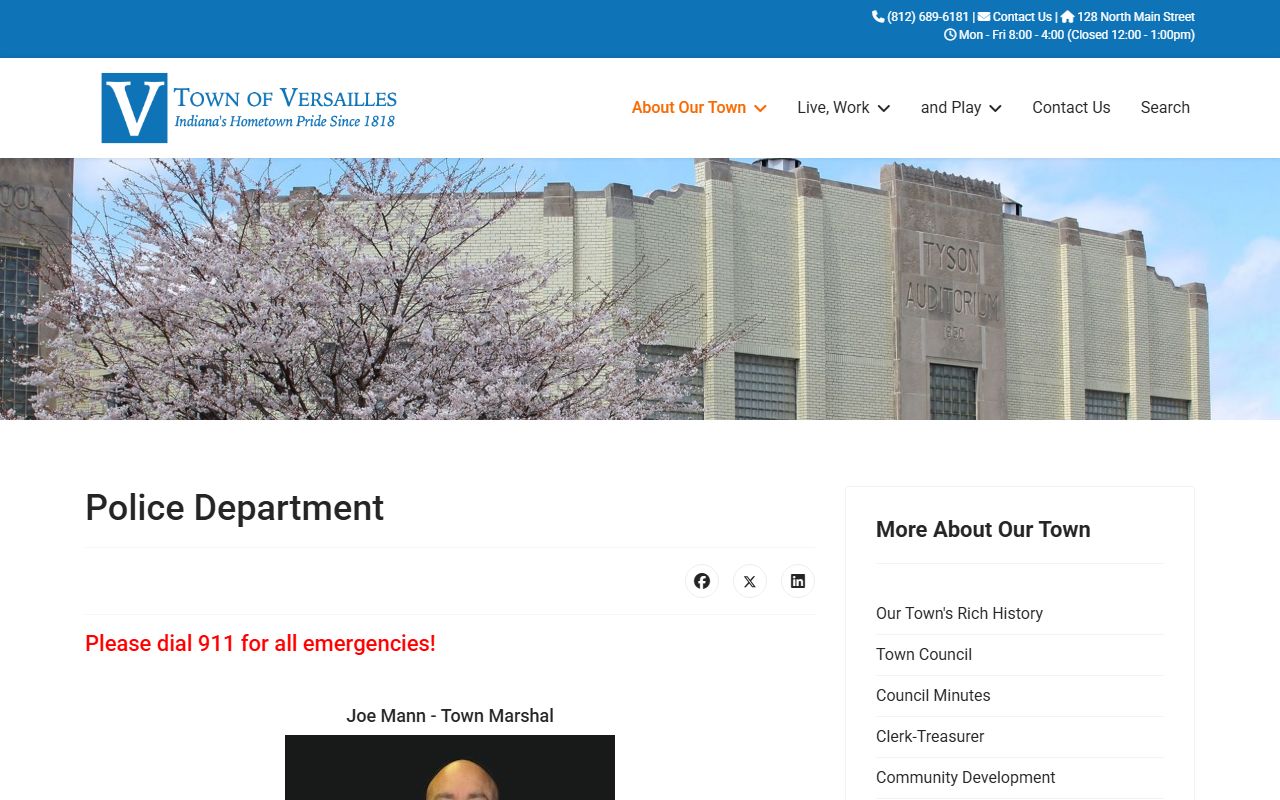
Versailles police information may help identify a local incident source, while the court record remains the case source after filing.
The City of Batesville Police Department page is another official local police source in a major Ripley County city.
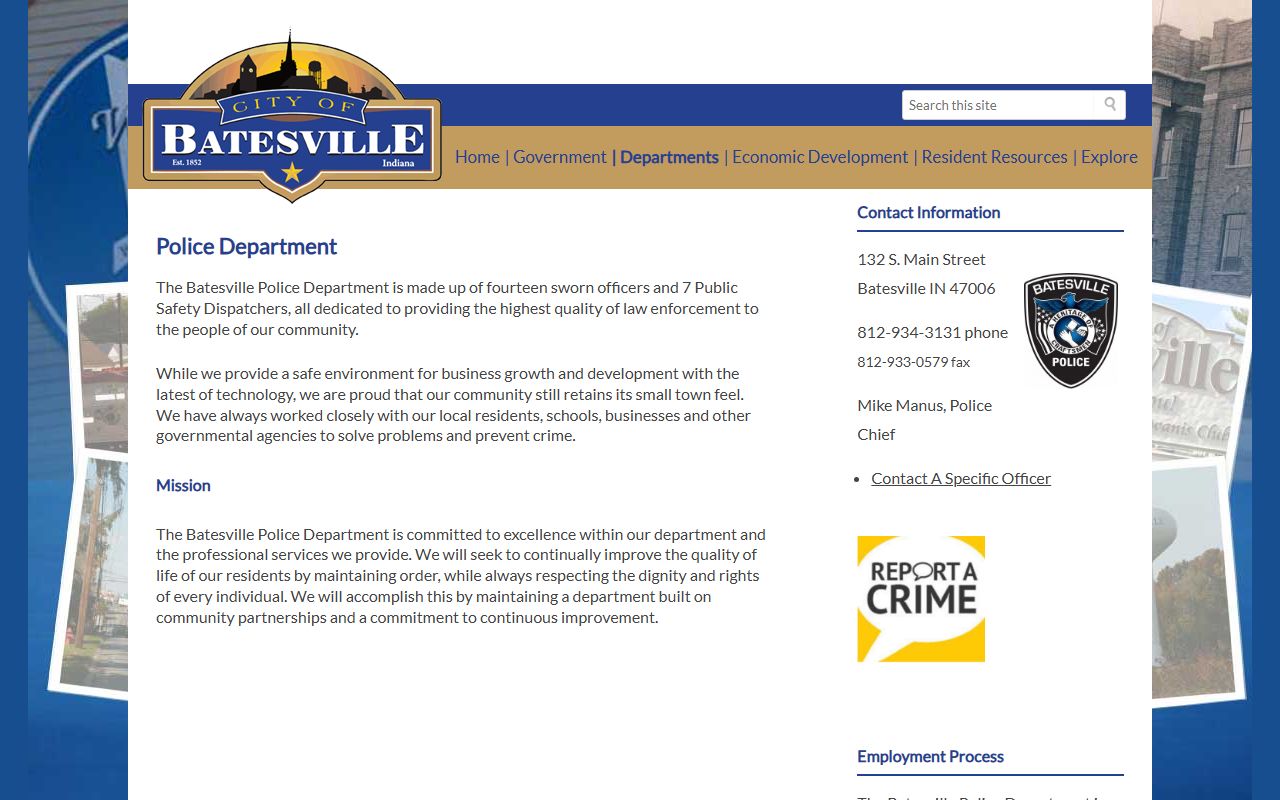
Batesville police records may support incident follow-up, but filed criminal charges and court outcomes should be checked through MyCase and the clerk.
Restricted Ripley Criminal Records
Some criminal-related records are not open through normal search. Juvenile delinquency records are restricted. Sealed cases and sealed documents do not show in ordinary public lookup. Granted expungements may be removed from public access. Protected addresses, minor names, social security numbers, financial account numbers, and certain victim or protected-order information can be redacted. MyCase also does not show protection-order cases through the normal search path because protected-person names and identifying information are excluded from online public access.
A person seeking a restricted criminal record needs a legal basis. That may be party access, attorney access, a court order, a statute, or a rule allowing inspection. A person seeking appointed counsel should ask the court at the initial hearing or contact the court or clerk about local appointed-counsel procedures, since no dedicated official Ripley County public defender office page was located in the research. For record copies, the clerk is the practical starting point once the case number and court are known.